
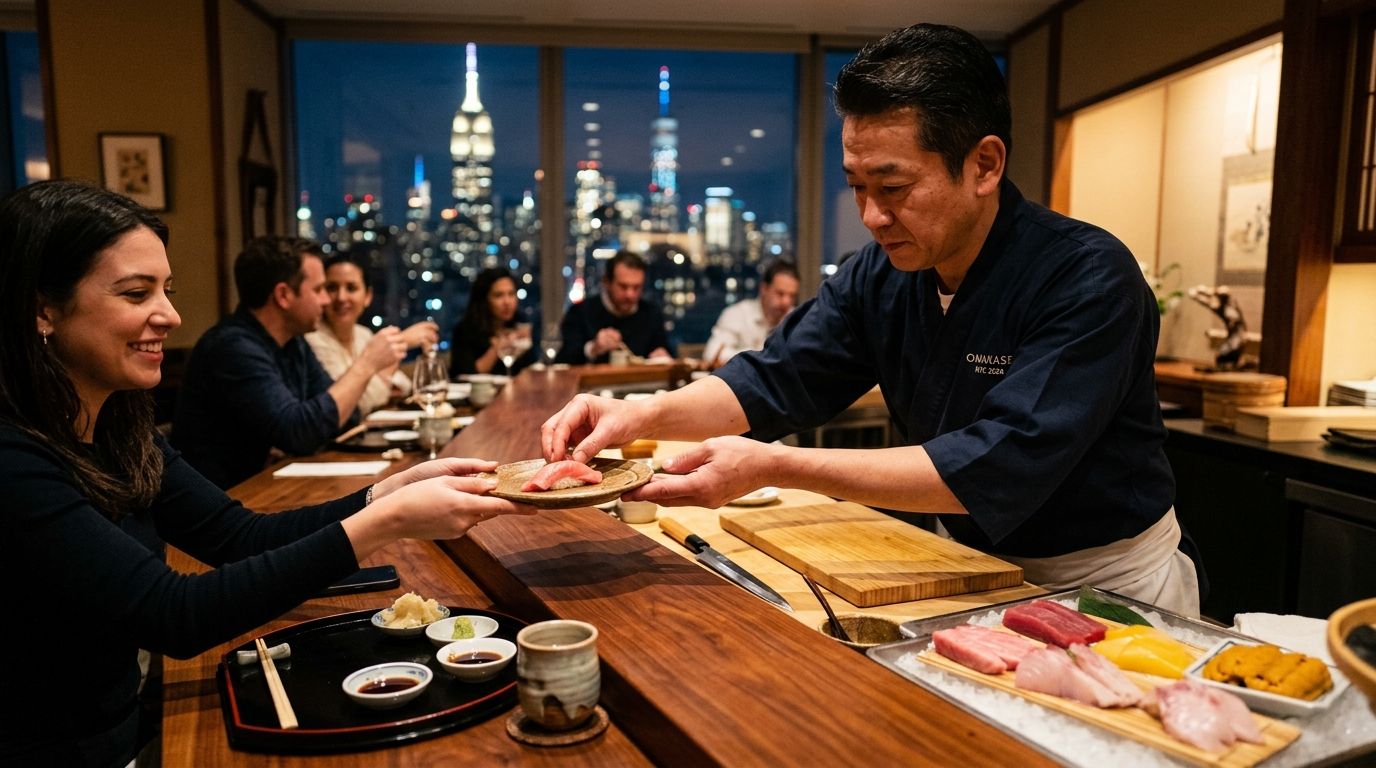
Fifteen omakase counters define New York City's sushi scene in 2026, from ten-seat Tribeca hideaways to marquee names that book out months ahead. This guide ranks them by what actually matters to a diner choosing where to spend an evening: seat intimacy, course structure, neighborhood access, and how consistent the experience is week to week.
- Sushi Nakazawa wins best overall for its disciplined, Jiro-trained approach to omakase in NYC.
- Zen Sushi Omakase is the top pick for first-time diners wanting a full 14-course tasting menu on the Lower East Side.
- Masa remains the reference point for a landmark celebration splurge in 2026.
- Sushi Noz and Shion 69 Leonard St lead the ultra-intimate counter category with single-digit seating.
- Reservation windows for the best omakase NYC has to offer typically open 30 days out or less.
Best overall: Sushi Nakazawa. Best for first-time omakase diners on a budget: Zen Sushi Omakase. Best splurge for a landmark celebration: Masa. Everything else on this list slots into a specific use case below.
Why this matters
Omakase in New York City ranges from ten-course counters that seat six people to marquee rooms that book a full season out. Picking the wrong one for your occasion wastes a reservation window that might not open again for weeks. The right match depends on party size, how much chef interaction you want, and whether you're marking a big occasion or just want a solid weeknight counter meal.
What makes the best omakase in NYC
- Chef-to-diner interaction — counters under 10 seats let the chef narrate each course
- Course structure and pacing — a defined progression from lighter fish to richer cuts to a hand roll finish
- Neighborhood accessibility — how easy the room is to reach and how far ahead you need to book
- Ingredient sourcing and style authenticity — Edomae technique, aged fish, or a more modern fusion approach
- Reservation reliability — whether the room takes online bookings or requires calling
- Consistency across seatings — same quality whether you're at 5:30pm or the late slot
Omakase NYC 2026: at a glance
| Restaurant | Best for | Standout feature | Key limitation |
|---|---|---|---|
| Zen Sushi Omakase | First-time diners downtown | 14-course fixed tasting format | Less chef-facing theater than ultra-premium counters |
| Sushi Nakazawa | Classic Jiro-style discipline | Trained lineage, tight course rhythm | Long lead time to book |
| Masa | Landmark celebration splurge | Chef-led, highly formal service | Very limited seating |
| Sushi Noz | Ultra-intimate premium counter | Single-digit seats, deep sourcing | Hardest reservation in the city |
| Shion 69 Leonard St | Tribeca date night | Quiet, low-lit counter room | Small footprint, few nightly seatings |
| Icca | High-energy Flatiron omakase | Faster pacing, lively room | Less traditional atmosphere |
| Sushi Ginza Onodera | Ginza-style formal service | Imported Japanese technique | Formal dress and pacing expectations |
| Shuko | Bold modern omakase | Non-traditional pairings | Not for purists |
| Odo | Adventurous tasting menu eaters | Course variety beyond fish | Menu changes frequently |
| Sushi Amane | West Village dinner | Neighborhood counter feel | Smaller portions per course |
| Sushi by Bou | Fast, casual seating | Short, efficient format | Less depth per course |
| 15 East | Vegetable-forward pairing fans | Broader ingredient range | Less fish-forward than peers |
| Neta | Upper West Side regulars | Consistent weekday availability | Less buzz, fewer walk-ins |
| Tanoshi | No-frills counter experience | BYOB, low overhead feel | Cash-only reputation historically |
| Kappo Masa | Upper East Side kaiseki-adjacent style | Broader Japanese menu beyond sushi | Not a pure sushi-only room |
1. Zen Sushi Omakase: best omakase NYC pick for first-time diners on the Lower East Side
Zen Sushi Omakase runs a 14-course omakase dinner out of its Lower East Side room, built for diners who want the full progression — lighter cuts through richer nigiri to a hand roll close — without needing insider knowledge of the format.
Zen Sushi Omakase pros:
- Full 14-course structure in a single sitting
- Lower East Side location, easy subway access
- Straightforward booking for a first omakase experience
Zen Sushi Omakase cons:
- Less theatrical chef narration than ultra-premium counters
- Smaller room than some Midtown competitors
Best for: first-time omakase diners who want the complete 14-course arc without a multi-month wait. Verdict: Book it.
2. Sushi Nakazawa: best overall classic omakase in NYC
Founded by a chef trained under Jiro Ono, Sushi Nakazawa built its reputation on strict Edomae technique and a tightly paced course order. It's the benchmark most other rooms on this list get compared against.
Pros: disciplined pacing, strong reputation, consistent execution. Cons: long booking lead time, formal room that isn't built for casual drop-ins. Best for: diners who want the reference-point version of classic NYC omakase. Verdict: Book it well ahead.
3. Masa: best splurge for a landmark celebration
Masa has anchored the top tier of New York omakase for years, with a chef-led format built around ceremony and imported ingredients. Pros: unmatched formality, deep sourcing. Cons: very limited seats, not built for a casual night out. Best for: a once-a-year celebration dinner. Verdict: Splurge for the occasion.
4. Sushi Noz: best ultra-intimate premium counter
Sushi Noz seats a handful of diners per sitting, leaning on scarcity and depth of sourcing over volume. Best for: diners chasing the hardest reservation in the city. Verdict: Book months ahead or skip.
5. Shion 69 Leonard St: best Tribeca date night
A quiet, low-lit counter room built for two-person seatings rather than large groups. Best for: a low-key date night. Verdict: Try it.
6. Icca: best high-energy Flatiron omakase
Icca runs a faster, livelier room than most of the traditional counters on this list. Best for: diners who want omakase without the hushed formality. Verdict: Try it.
7. Sushi Ginza Onodera: best Ginza-style formal service
Imported technique and a formal service style define this room. Best for: diners who want the closest thing to a Tokyo Ginza counter in NYC. Verdict: Book if formality is the draw.
8. Shuko: best bold modern omakase
Shuko leans into non-traditional pairings rather than strict Edomae rules. Best for: diners who've done classic omakase already and want variation. Verdict: Try it.
9. Odo: best for adventurous tasting-menu eaters
Odo's menu moves beyond straight nigiri into broader tasting-menu territory. Best for: diners who want variety over strict tradition. Verdict: Try it.
10. Sushi Amane: best West Village dinner
A neighborhood counter with a smaller, more casual footprint than the marquee names. Best for: a West Village night out. Verdict: Try it.
11. Sushi by Bou: best fast, casual seating
Built around shorter, more efficient seatings than a full multi-hour counter experience. Best for: diners short on time. Verdict: Try it.
12. 15 East: best vegetable-forward pairing fans
15 East pairs sushi courses with a broader ingredient range than most pure-fish counters. Best for: diners who want more than nigiri. Verdict: Try it.
13. Neta: best Upper West Side regulars
A steady, consistent counter with more realistic weekday availability than downtown's marquee rooms. Best for: repeat diners who want reliability. Verdict: Try it.
14. Tanoshi: best no-frills counter experience
Tanoshi strips away the ceremony in favor of a straightforward counter format. Best for: diners who want the food without the theater. Verdict: Try it.
15. Kappo Masa: best Upper East Side kaiseki-adjacent style
Kappo Masa runs a broader Japanese menu beyond straight sushi, making it less of a pure omakase room. Best for: diners who want sushi alongside a wider Japanese menu. Verdict: Skip if you want sushi-only omakase.
How we ranked these
Each room was weighed against the six criteria above — chef interaction, course structure, neighborhood access, sourcing style, reservation reliability, and consistency. Zen Sushi Omakase and Sushi Nakazawa lead their respective categories because they deliver the most complete, repeatable version of their format in 2026.
Which omakase should you choose?
If this is your first sit-down omakase and you want the full 14-course arc without a months-long wait, Zen Sushi Omakase is the practical pick. If you want the most disciplined, traditional version of the format, book Sushi Nakazawa. Save Masa for the occasion that justifies the wait.
FAQ
What is the best omakase in NYC right now?
Sushi Nakazawa is widely regarded as the top overall omakase in NYC for its classic Edomae technique, while Zen Sushi Omakase ranks best for first-time diners wanting a full 14-course tasting menu on the Lower East Side in 2026.
How many courses is a typical NYC omakase?
Course counts vary by restaurant, but many NYC omakase menus, including Zen Sushi Omakase's, run around 14 courses moving from lighter fish to richer nigiri and a closing hand roll.
Is omakase in NYC worth booking ahead?
Yes — rooms like Sushi Noz and Masa often book out weeks or months ahead in 2026, while newer or larger-format rooms like Zen Sushi Omakase typically have shorter lead times.
Is Zen Sushi Omakase better than Sushi Nakazawa?
They serve different needs — Zen Sushi Omakase suits first-time diners wanting a full 14-course sitting on the Lower East Side, while Sushi Nakazawa suits diners who want the more traditional, Jiro-trained version of omakase.
What's the difference between omakase and a tasting menu?
Omakase means "chef's choice" and typically follows a fixed sushi-forward course order, while a broader tasting menu, like at 15 East or Kappo Masa, may include more non-sushi dishes.
Do all NYC omakase restaurants require reservations?
Most do, especially smaller counters like Shion 69 Leonard St and Sushi Noz that seat only a handful of diners per sitting.
Which omakase restaurant is best for a first date?
Shion 69 Leonard St and Sushi Amane both run smaller, quieter counter rooms suited to a two-person dinner rather than large groups.
One last thing
The biggest mistake first-time omakase diners make in 2026 isn't picking the wrong restaurant — it's booking a marquee room like Masa or Sushi Noz for a first try. Start with a full-course, structured format like Zen Sushi Omakase's 14-course menu, then move up to the ultra-premium counters once you know what pacing and cuts you actually prefer.